News
Bill Gross Launches Idealab.ai to Help Mass-Produce New Startups
[Fortune] Idealab founder Bill Gross has launched Idealab.ai, a free platform with more than 1.2 million AI-generated business ideas and tools to test and build them.
Bill Gross, who founded the tech incubator Idealab in 1996 and has helped create more than 175 companies, has launched Idealab.ai, a free platform that lets anyone search a library of more than 1.2 million business ideas and use AI-powered tools to test and build them. Fortune’s Diane Brady covered the launch in the CEO Daily newsletter.
The ideas were generated by a system that analyzed more than 17 million sources and applied 31 idea-generation methods developed by Gross. These methods look for unmet needs, enabling technologies and market shifts, such as regulatory or cultural changes. Users can enter their LinkedIn profile or skills to get matched ideas, filter by estimated startup cost, and search patents by institution or company.
Gross says his goal is to help create a million new businesses and 100 million new jobs by putting these tools in people’s hands for free. Planned features include a “periodic table of business functions” to guide founders through running a company, a community for collaboration, and connections to funders and partners.
Source: Fortune
Hark Releases an AI Personal Assistant Built Around Privacy
[TechCrunch] Hark has widely released Hark Pro, an AI assistant that operates a user's computer on their behalf, with a privacy-first approach.
Hark, a startup founded less than a year ago by serial founder Brett Adcock, has widely released Hark Pro, an AI personal assistant that is free to use, with a paid tier for heavy users. As TechCrunch’s Tim Fernholz reports, the company is focused on building a better interface for AI, and its product is powered by a model trained specifically for computer use, allowing it to carry out tasks on a user’s behalf.
Hark Pro is a full-screen interface with a central chat box, a feed of suggested actions and “panels,” mini-dashboards on topics the user cares about. Once users connect their email, calendar, files and payment cards, the assistant can proactively flag expenses that need approval and emails that need replies, offer to book travel, or handle tasks such as renewing a car registration. The agent’s web navigation is shown in a small window, which design lead Abidur Chowdhury says helps build trust.
Hark says it does not plan to sell ads or exploit user data, and that any profiling is limited to what is needed to complete tasks. The company plans to release an AI-native device in 2027.
Source: TechCrunch
Persona AI Targets Korean Shipyards and Steel Mills With Humanoid Robots
[Seoul Economic Daily] Persona AI is expanding its South Korean partnerships beyond shipbuilding and steel into energy and construction.
Persona AI, a Houston-based startup founded in 2024, builds humanoid robots for heavy-industry sites such as shipyards and steel mills. In an interview with Seoul Economic Daily, chief business strategy officer Michael Perry said the company plans to extend its Korean partnerships beyond shipbuilding and steelmaking into energy and construction.
Persona AI is running proof-of-concept projects with HD Hyundai on a shipyard welding robot and with POSCO DX on a robot for steel logistics. POSCO DX has invested $2 million in the company. Perry pointed to labor shortages in skilled trades, citing a projected U.S. shortfall of more than 330,000 welders by 2028, and said Korea faces a similar problem as its welders age. The robots are designed in humanoid form so they can reach tight spaces such as shipyard ladders and withstand water, dust and harsh temperatures.
A third-generation robot is slated for release this fall, and the company is preparing for mass production and maintenance services. Perry expects robots to be commercialized on factory floors within about two years.
Source: Seoul Economic Daily
Positron Valued at $5 Billion in New Funding as Demand for AI Chips Surges
[WSJ] NEA, Atreides and Jim Clark are among investors putting $875 million into firm making chips designed for fast running of AI models
Positron, an artificial-intelligence chip startup focused on designing hardware that helps AI models run more quickly, said it has raised $875 million at a valuation of $5 billion, marking a significant increase in the company’s worth over the last six months.
The details
The round was co-led by venture-capital firm NEA, Atreides Management, Valor Equity Partners, Andra Capital, analyst Dylan Patel’s SemiAnalysis Capital and Netscape co-founder Jim Clark. Positron raised $230 million in its most recent funding round, in February of this year, valuing the company at $1 billion.
Source: WSJ
I Retired My Dating Spreadsheet. Can AI Help Me Find Love?
For most of human history, we didn’t find a partner alone. We had friends, family, community members, and even dedicated matchmakers to help us along the way.
For most of human history, we didn’t find a partner alone. We had friends, family, community members, and even dedicated matchmakers who knew us well. They knew our quirks, our values, what lit us up, and sometimes even the things we couldn’t see in ourselves.
And most importantly, they knew someone else well enough to say: I think you two should meet.
Somewhere along the way, we replaced that person with a set of digital filters: age range, height, location, and six carefully curated photos chosen because they are flattering and, ideally, good for the algorithm!
I know I’m not alone in finding modern dating frustrating. Dating apps can feel transactional, while traditional matchmaking is often expensive and inaccessible to most people.
Recently, late at night, I was scrolling through my ChatGPT history. There were conversations about my most recent breakup, the patterns I keep repeating, what I value most in a relationship, and what I’m looking for in a partner. And then it hit me. Maybe ChatGPT knows me the way I would want a good matchmaker to.
It knows more about my values, my history, my relationship goals, my fears, and the patterns I am still trying to process than any dating profile. Because in my conversations with ChatGPT, I wasn’t presenting a polished version of myself. I was talking to it, unfiltered, for months.
I’m not saying I want an app to replace the serendipity of meeting my person out in the world. I really don’t. And I’m certainly not talking about my AI agent dating your AI agent. That is too weird and dystopian! But I’d genuinely love to put AI to work with everything it already knows about me and have it identify potential people I could connect with.
What if AI already knows enough about me to make a meaningful introduction?
I know this may not be a popular opinion. People are skeptical of AI and are rightly disturbed by the idea of their most personal data being harvested to train models and increase the value of a handful of major tech companies. I am too. But what if, with our permission, AI could put all that personal context to work for us?
Bye Bye, Spreadsheet
I grew up in a strict Egyptian family. At 22, I married the first person I ever kissed, and we divorced in 2015, on my 37th birthday. I didn’t go on a real date until 2019. And when I finally did, I approached dating the way I approached almost everything else in my life at the time: like a scientist.
I built a spreadsheet.
I listed the qualities I thought I wanted in a partner, rated the dates, and wrote copious notes on every person I met. Some were very sophisticated observations. Others were more like: “Shirt not ironed; no chemistry.” Or: “Super smart; no butterflies.” :)

I had turned dating into a sales funnel: meet enough people, keep track of the data, and eventually I’d meet The One! I approached each connection with curiosity, and I’m grateful for the people I met and what those dates taught me. I met some genuinely wonderful people. They just weren’t my person.
Eventually, with the help of a dating app I’ve since sworn off, I met someone and fell in love. We were together for three years. When that relationship ended last year, I came to a realization: I didn’t want finding love to be another project I had to optimize or a to-do I had to complete.
I want to be more heart-led. More open. More willing to be surprised. More willing to trust chemistry, timing and serendipity.
Not a better spreadsheet. But a connector.
And perhaps paradoxically, that is exactly where I think AI could become interesting. Not as a better spreadsheet. As a connector.
Boardy, honestly
I already have an AI agent living in my WhatsApp that plays this connector role in my professional life. Its name is Boardy. A few months ago, I got on a call with Boardy, told it what I invest in and why, and let it find the kinds of founders and ideas I’m drawn to. Now it texts me things like: I just spoke with someone building in health AI. Want an intro? Sometimes I say yes. Sometimes I say no thanks.
And, full disclosure, I ghost Boardy all the time.
Still, I find it intriguing. Boardy holds context about me, spots a potential connection, makes the introduction possible, and then gets out of the way.
AI is not trying to be the relationship. It is helping create the conditions for one.
AI is not trying to be the relationship. It is helping create the conditions for one.
Engineering serendipity
I keep thinking about how Dua Lipa first met her now-husband Callum Turner at The River Café in London, and later realized they were both reading the same book, Trust by Hernán Díaz. You can’t manufacture that level of meet-cute. But you can create more opportunities for those kinds of moments to happen.
I am seeing new experiences pop up in major cities that are explicitly designed to bring curated groups of people together IRL around shared interests, values or experiences and hope that something clicks.
AI can engineer serendipity. The falling in love part is still on me.
That’s what I mean by engineering serendipity: intentionally creating the conditions for an unexpected connection. AI could add another layer by acting as a smart curator, connecting enough dots to say: You two really should talk.
That feels much closer to what a great human matchmaker does. They intuit possibility, make the introduction, and then get out of the way.
AI can engineer serendipity. The falling in love part is still on me.
Putting myself out there
For years, I’ve argued that the most powerful future is not human or AI. It is human + AI. Humans bring intuition, trust and chemistry. AI brings context, pattern recognition and scale. My investment thesis at Blue Tulip Ventures is built around the idea that AI should unlock human potential. And I’ve been wondering what it would look like to apply that same belief to my own life.
I’m going to do something that feels brave and vulnerable: say clearly what I’m looking for, and invite both humans and AI into the search.
So, here goes: I feel incredibly grateful for the life I have. It is full of family I love, work I’m passionate about, health, adventure and learning. At the same time, I believe life can feel even more joyful, connected and expansive when it is shared with the right person.
I believe vulnerability is a gateway to connection.
I would love to meet my person. The love of my life. Someone who matches my intellectual curiosity, who is generous and kind, who has a growth mindset and sees possibility in the world. Someone I can talk to endlessly, explore the world with, learn from and inspire, and who does the same for me. I want a relationship that feels alive: full of passion, play, adventure, friendship and presence. And if I’m really honest, there is another truth here too: I am scared of ending up alone.
I’m choosing not to hide that desire or that fear because I believe vulnerability is a gateway to connection. I’m tapping into my human network: the people who know me well enough to make thoughtful introductions. And I’m also curious to see what AI can do with everything it already knows about me. I even signed up for the waitlist for Overtone, the new dating service from Hinge founder Justin McLeod, because I want to explore what a more AI-native approach to matchmaking might feel like.
Maybe you’re reading this and feel inspired to introduce me to someone. Maybe AI spots a possibility and makes a connection. Maybe there’s some unexpected magic in bringing the two together.
So, universe, friends, family, algorithms: Who do you think I should meet? :)
Gen Z isn’t happy about AI. Even when mom helped invent it.
[The Boston Globe] Rana el Kaliouby (center) and her son, Adam, and daughter, Jana, have very different views on AI. Rana el Kaliouby is a leading scientist developing new kinds of AI.
Jana Amin, who graduated from Harvard last year, calls herself a strong AI skeptic. After witnessing too many fellow students using the technology as a crutch, she rejected AI andhelped found a cafe in Cambridge to encourage people to enjoy activities like music performances and plain old conversations, away from their digital devices.
Many of her peers are wary of AI, worried about the technology’s impact on thinking and writing skills, job prospects, and the environment.
But in Amin’s case, it feels almost ironic. That’s because her mother, Rana el Kaliouby, is a pioneering scientist in AI who is well known in technology circles. She runs a venture capital fund called Blue Tulip Ventures, investing in AI startups, and previously cofounded Affectiva, an MIT Media Lab spinout now owned by Swedish firm Smart Eye.
Source: The Boston Globe
World model maker Odyssey nabs $1.45B valuation backed by Amazon and other big names
[TechCrunch] World model maker Odyssey nabs $1.45B valuation backed by Amazon and other big names.
Odyssey, a world model AI startup founded by self-driving vehicle pioneers CEO Oliver Cameron and CTO Jeff Hawke, has raised a $310 million Series B round at a $1.45B valuation led by Natural Capital, with Amazon, AMD Ventures, GV, and others participating.
World models are the next big thing in AI beyond text- and chat-based large language models. They gather data from the physical world and simulate it with accurate physics. In Odyssey’s case, it has mimicked how Google Earth gathered data; the startup sent people out with cameras strapped to their backs. (Google drives camera-equipped cars around.)
That approach makes sense given the backgrounds of the founders. Cameron was the co-founder and CEO of autonomous vehicle startup Voyage, which was acquired by GM’s Cruise, where he later became VP of product; Hawke was an engineer at buzzy U.K. self-driving startup Wayve.
Odyssey, founded in 2023, now offers a handful of world models for a variety of use cases, from video-game creation to robotics. It is perhaps best known for producing rich, interactive video from text prompts.
With the backing from Amazon, the startup says AWS is now its preferred cloud provider and it will optimize its models to run on AWS’s Trainium chips, a competitor to Nvidia’s AI chips.
In addition to the VCs that participated in this unicorn-crowning round, Odyssey has corralled an impressive list of angel investors as well. These include Jeff Dean, Elad Gil, Garry Tan, Guillermo Rauch, and Cruise founder Kyle Vogt. The company has now raised $337 million to date.
Source TechCrunch
I’m an AI Scientist. My Daughter Refuses to Use AI.
I spend most of my waking hours inside the AI economy. I talk to founders building it, invest in the companies racing to scale it, and think about what it means for the next generation.
My son Adam Amin is what people now call AI-native. He’s only in high school but he vibe-codes everything and is the first to try every new model when it drops. For Adam, AI is more than a thought partner; his team of AI agents are in charge of creating study notes for his biology class, translating Arabic diaries of Egyptian archaeologists from the 1900s, and analyzing his squash matches, coaching him on how to improve his game. Honestly, he is a more advanced user of AI than I am. When I watch him work, I see exactly the future I've been describing on stage.
My daughter Jana Amin graduated from Harvard last spring, where she studied food anthropology. She has since co-founded Minara, a culture salon and café in Cambridge, where young people get together, share a meal and hang out. In its first year, they hosted 80+ events and more than 3,000 people came through its doors to attend book talks, learn calligraphy from someone's grandmother, and host dinners where phones go in a basket by the door. They leave with collaborators, friends, sometimes a new direction for their life.
Sometimes the parent in me worries about her. And sometimes the investor in me does too.
I worry especially about what it means for her, as a young woman, to opt out of AI at a moment when AI is creating massive economic opportunity. The people who will benefit most are the ones building it, funding it, and learning to wield it fluently.
The people who will benefit most from AI are the ones building it, funding it, and learning to wield it fluently. So what does it mean to opt out?
That is a big part of why, as an investor, I am intentional about backing women founders and bringing more women investors into my fund. If this technology does what we believe it will do, it will be a major wealth multiplier. It already is. And that wealth needs to flow more broadly than it has in past technology waves.
So yes, when I look at Jana, the strategist in me runs the clock forward five and then ten years, and I wonder what it will mean to have opted out. Not just in terms of a missed skillset, but a missed financial opportunity.
But the more time I spend with what she is actually building, the more I realize that “opting out” may not be the right frame. She is not behind. She is doing it her own way, and responding to something many of us in this industry are not talking about enough.
The person who articulated it best for me wasn't a critic of AI. It was Brian Chesky, the founder and CEO of Airbnb, on stage at the Masters of Scale Summit in October.
He pointed out that we are living through, by some measures, the loneliest moment in human history. That birth rates are falling everywhere, mental health crises are climbing and the loneliest cohorts in America are teenage girls and men without college degrees. "What communities exist today in the physical world?" he asked. "They're diminishing." And then he said something that really resonated : "I want Airbnb to be the company that gets you off your phone, not on your phone … Because real connection happens in the real world."
The CEO of one of the most successful technology companies of our era, on stage at a summit about scaling businesses, is telling people to put their phones down and find each other. And my 23-year-old daughter, with no investor deck, has been building exactly the thing he's describing every week, in rooms with no Wi-Fi password printed on the wall.
Jana is clear-eyed about her work in a way that's rare at any age.
She's not anti-technology because she's afraid or ignorant of it. She's anti-technology for this specific purpose, which is human connection. That's the one thing she refuses to outsource.
Real connection happens in the real world. Jana is not anti-technology because she's afraid or ignorant of it. She's choosing to double down on human connection. That's the one thing she refuses to outsource.
The premise is simple: your safe space for conversation shouldn't be a chatbot. It should be a room full of human beings who remember your name the second time you come back.
I've spent my career advocating for human-centered AI, and my daughter has further demonstrated what that phrase has come to mean.
Human-centered AI is not a world in which everyone wears an AI chip and anyone who doesn't is a second-class citizen, or where children become best friends with their chatbots before their classmates, a teenager's first heartbreak is processed entirely with an app or every entry-level job is done by an agent.
Human-centered AI is a world where AI unlocks human potential and amplifies human ability without replacing it. Crucially, it reserves agency and final judgment with the human. You decide which tasks to delegate and which to keep. Some tasks belong to humans, full stop, and human relationships sit at the top of that list. Jana has known this all along.
So when those parents come up to me after talks, and when graduates email me wondering whether they've already missed the boat, I find myself saying something I wouldn't have said a year ago.
The anxiety underneath their questions isn't really about AI. It's the much older question of how a young person finds a meaningful path in a world that keeps changing the rules. And part of what's making it so hard right now is that we've collapsed the answer into a single option: lean in, or fall behind.
A monoculture of AI-everything is its own kind of loss. Human-centered AI means knowing where AI belongs, and where it doesn’t. So we have to ask: what should we keep human? What is worth protecting?
What I've started to think is that the AI enthusiasts and the AI skeptics need each other. The skeptics like Jana ask the questions that don't surface when you're inside the work:
What should we keep human? What's worth protecting? What atrophies if we're not intentional?
A monoculture of AI-everything creates its own kind of loss. We need food anthropologists, conveners, and people who still believe that writing your own emails is a form of respect.
I’m not sure how Jana’s story will progress from here. I could push her. I could sit her down and say, seriously, jump on the train. But I'm choosing not to. Maybe she will find ways to bring AI into her work to scale her impact. Maybe she'll prove that some of the most important work doesn't need it at all. Either path is a good one as long as she's asking the right questions. The most human-centered thing I can do, as her mother and as someone who has spent 20 years of her career building AI, is trust her to decide.
AI’s ‘boys’ club’ could widen the wealth gap for women, says Rana el Kaliouby
[TechCrunch] AI scientist, entrepreneur, and investor Rana el Kaliouby is worried that AI could become another “boys’ club” in the tech industry.
AI scientist, entrepreneur, and investor Rana el Kaliouby is worried that AI could become another “boys’ club” in the tech industry. At the SXSW conference in Austin on Sunday, el Kaliouby shared her view that a lack of diversity in the field could lead to economic disadvantages for women in tech, with further ramifications.
“I think AI today is a boys’ club. I think diversity is not a very popular conversation topic these days, but I think it’s so important because AI is creating incredible economic opportunity,” el Kaliouby said onstage, when asked if the perception of AI being a boys’ club was a myth. (The interviewer showed a series of headlines from TechCrunch showcasing AI startups with male founders to demonstrate the point.)
El Kaliouby, who sold her emotion-detection software company Affectiva in 2021 and is now co-founder and general partner at Blue Tulip Ventures, said that three out of four investments at her firm are in startups with women CEOs.
“I don’t ‘just’ invest in women,” she clarified. “But I really try to seek these women founders and support them, if not by a check, but in other ways, because they’re not getting the opportunity that they should and they need.”
“If women are left out — because they’re not founding these companies, because they’re not getting the funding, because they’re not even investing in the funds that are investing in these companies — we’re going to look back five years from now or a decade from now, and…we’re going to have widened the economic gap like crazy. So this is something that really concerns me,” el Kaliouby noted.
Source: TechCrunch
Former Affectiva CEO, CMO to invest in AI with new VC firm
[BBJ] Gabi Zijderveld (left) and Rana el Kaliouby launched Blue Tulip Ventures, an early-stage venture capital firm focused on 'AI that is good for you,' in May 2024.
Over the past 10 years, Rana el Kaliouby and Gabi Zijderveld were on a parallel path that followed artificial intelligence company Affectiva's trajectory: fundraising, adding customers, signing partnerships and, ultimately, exiting the business in a $73.5 million deal.
This month, the duo's path began steering into a new direction: venture capital. About three years after Swedish firm Smart Eye merged with Boston-based Affectiva, el Kaliouby and Zijderveld teamed up to launch Blue Tulip Ventures, an early-stage venture capital firm with big plans to invest in AI startups and even bigger ambitions to grow into a household name with lasting impact.
"We're not just interested in raising a fund — we want to build a firm," el Kaliouby said Monday in a joint interview with Zijderveld. "We want to build a firm where we can raise multiple funds, create a legacy."
Source: BBJ
Rana el Kaliouby on why AI needs a more human future
The Affectiva founder and Blue Tulip investor argues that the biggest opportunity in AI is building tools that amplify people.
AI is moving fast. But are we really keeping humans at the center? AI scientist, founder of Affectiva, investor at Blue Tulip, and host of Pioneers of AI, Rana el Kaliouby makes the case that human-centric AI isn’t just a safety guardrail; it’s the key to thriving socially, economically, and emotionally. She also cuts through the noise on the buzziest AI myths, including whether we’re in an AI bubble.
This is an abridged transcript of an interview from Rapid Response recorded live at SXSW, hosted by former Fast Company editor-in-chief Robert Safian. From the team behind the Masters of Scale podcast, Rapid Response features candid conversations with today’s top business leaders navigating real-time challenges. Subscribe to Rapid Response wherever you get your podcasts to ensure you never miss an episode.
Healthmaxxing vs. Emotionmaxxing: My WHOOP Experiment
My daughter and I were recently debating whether to go to a concert. Neither of us was that excited about it, but somewhere along the way we realized we were asking the wrong question.
My daughter and I were recently debating whether to go to a concert. Neither of us was that excited about it, but somewhere in the back and forth, I noticed I was weighing something else entirely: whether going to the show was worth messing up my WHOOP data. (For context, the concert started at midnight.)
A night out with Jana, weighed against a recovery score… as if the two belonged on the same scale. In the end, I didn't let my WHOOP decide (we didn't end up going, but for entirely different reasons). But that I had done the weighing at all bothered me, which is what I want to reflect on here.
There's a lot being said right now about healthmaxxing.
Scott Galloway calls it “perfection maxxing,” how people are so attached to their numbers, they'll skip a night with friends. And then take entrepreneurs, investors, and biohackers who often go to extreme measures to reverse their aging. Maybe they will outlive us all, but I wonder if these intense protocols take away joy and spontaneity in life.
At some point, tracking your health stops being about living well and becomes a way of performing it. That's why I chose aliveness as my intention for 2025, and kept it for 2026 by doing the things that make me feel alive, even the ones that tank my recovery score. I can’t pretend that I have figured it out, but I am continuing to work on finding that balance.
First, the New Flex
I have been a loyal WHOOP wearer for over five years and I find the data immensely helpful. It enables me to turn my vague intention to be healthier into habits that have a generally positive impact on my life.
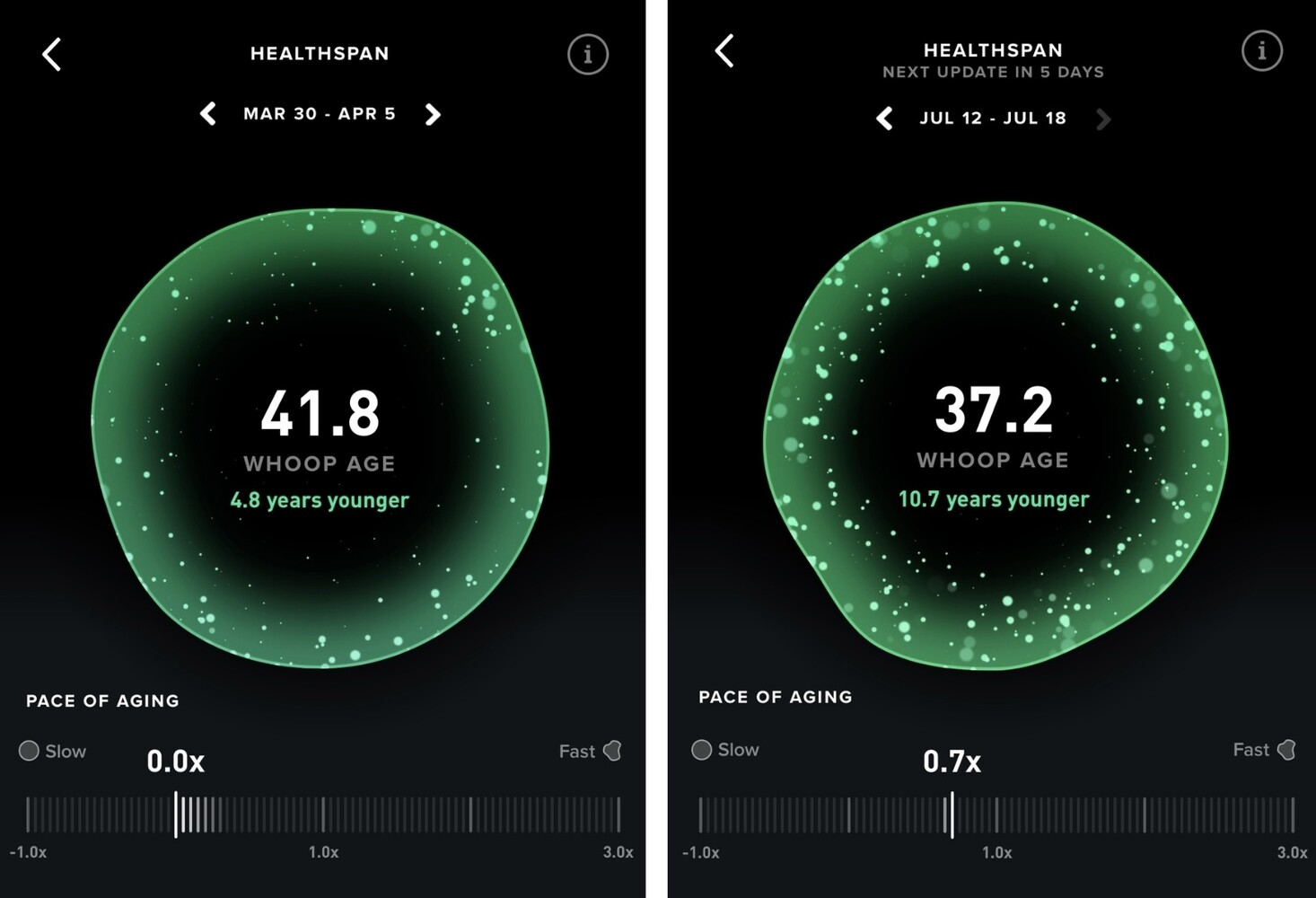
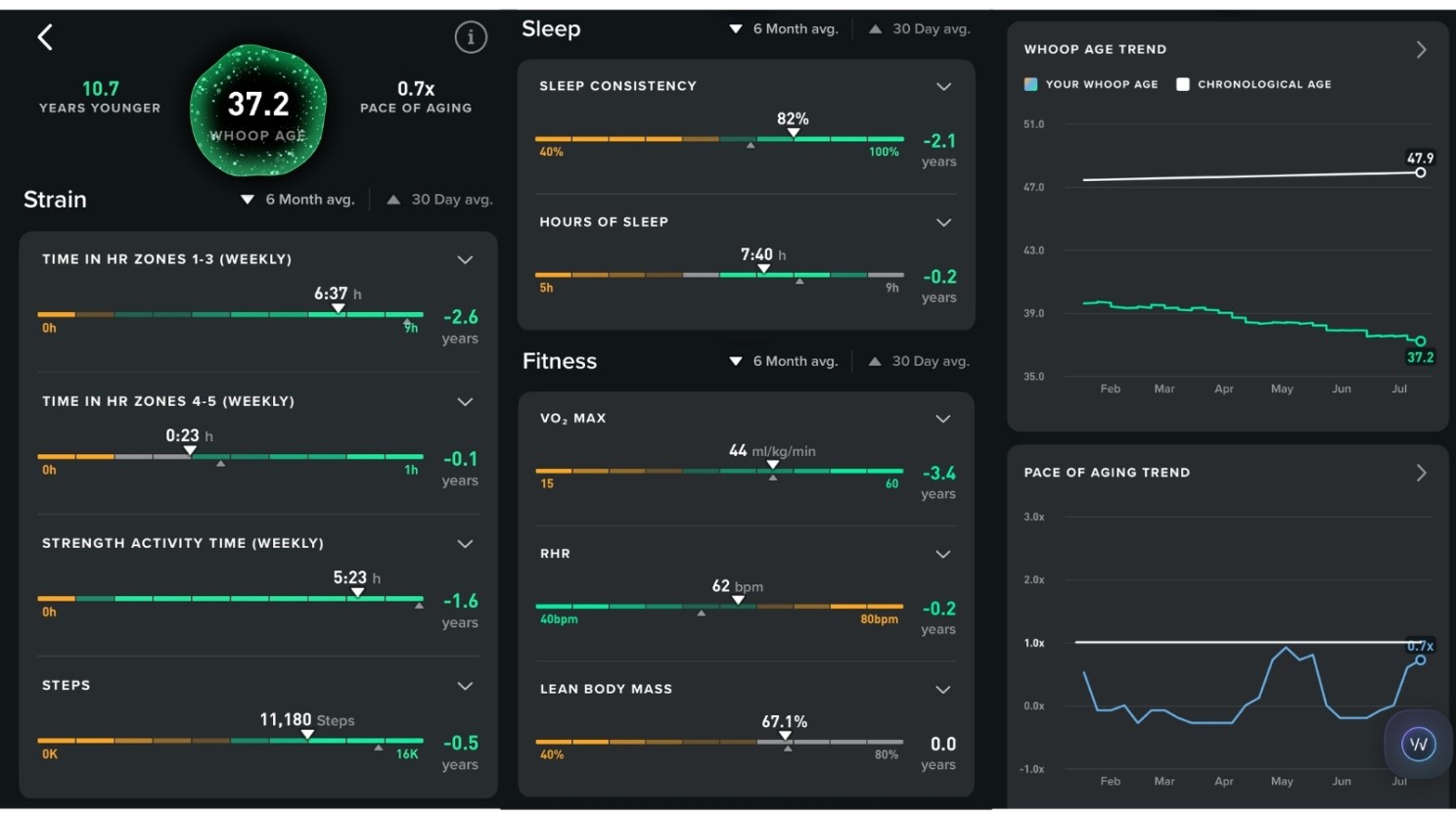
For me the WHOOP Age has been a game changer. About a year ago, WHOOP rolled out this feature, which combines your sleep, movement, heart rate, and several other health metrics into an estimate of your biological age and pace of aging. (And yes, I am very aware that it is an estimate).
When I first started, I was 46 and WHOOP estimated my age at 41.8, or 4.7 years younger than my chronological age. I set the goal of my WHOOP Age being 10 years younger than my chronological age before I turn 48 this August. I hit that goal a few weeks ago. My WHOOP Age is now 10.7 years younger than my actual age. Woot woot!
Somewhere along the way, this WHOOP Age turned into a subculture. I'll be in a meeting and somebody clocks the band on my wrist. “Are you wearing a WHOOP? What's your WHOOP age?” Eight years younger, I'll tell the guys at the table (it is often men who ask me this). “You?” I ask back. “Ten years younger,” they might say. Then the phones come out, right there on the conference table, so we can show each other. It's a flex and also a funny kind of handshake, a way of saying I'm in this too.
This isn't a vanity thing.
WHOOP has changed how I think about my health. I've used it to run experiments on myself, testing different sleep, exercise, and eating patterns. When I walk an extra 5,000 steps a day, for example, I can add about two-tenths of a year to my projected health span. I realize that there will be plenty of people who will debate me on the scientific accuracy of WHOOP Age and that’s fine. The point is, it has given me an actionable framework for helping me make better decisions about my body and health.
It Logged the Dance, Not the Joy
But for everything my WHOOP knows about my body, it knows much less about my life. While it has a number for everything I did that day: my strain, my recovery, my heart rate, how I slept, it doesn't know the context of my activities or have a thing to say about what any of it meant.
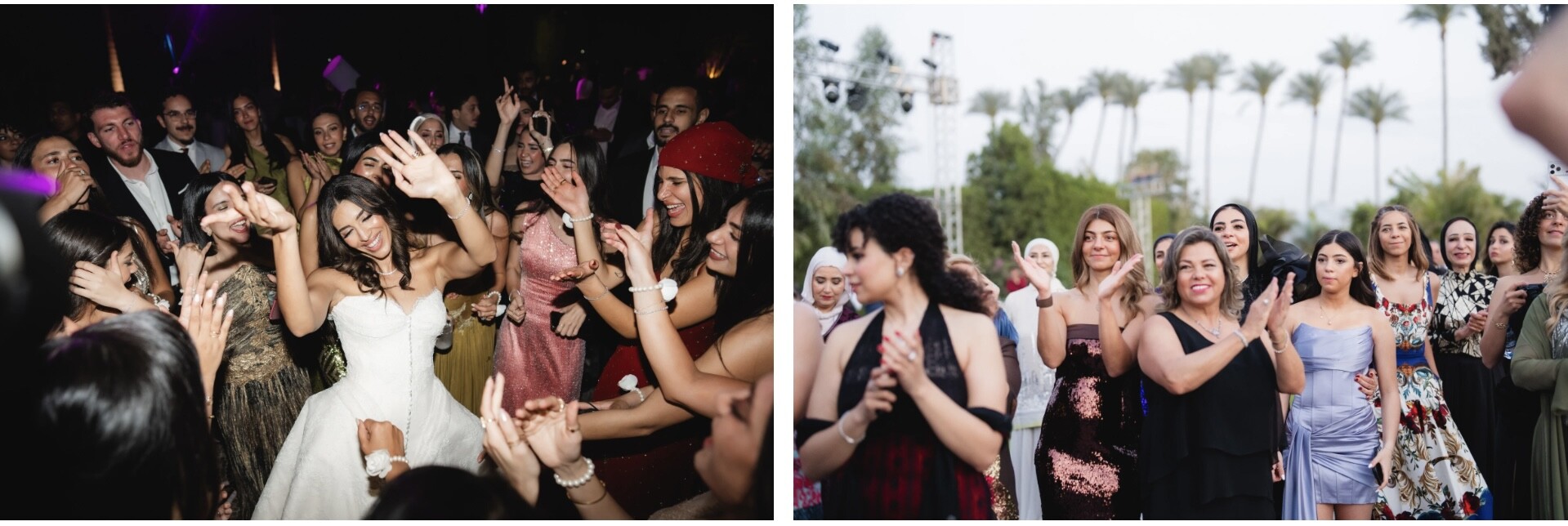
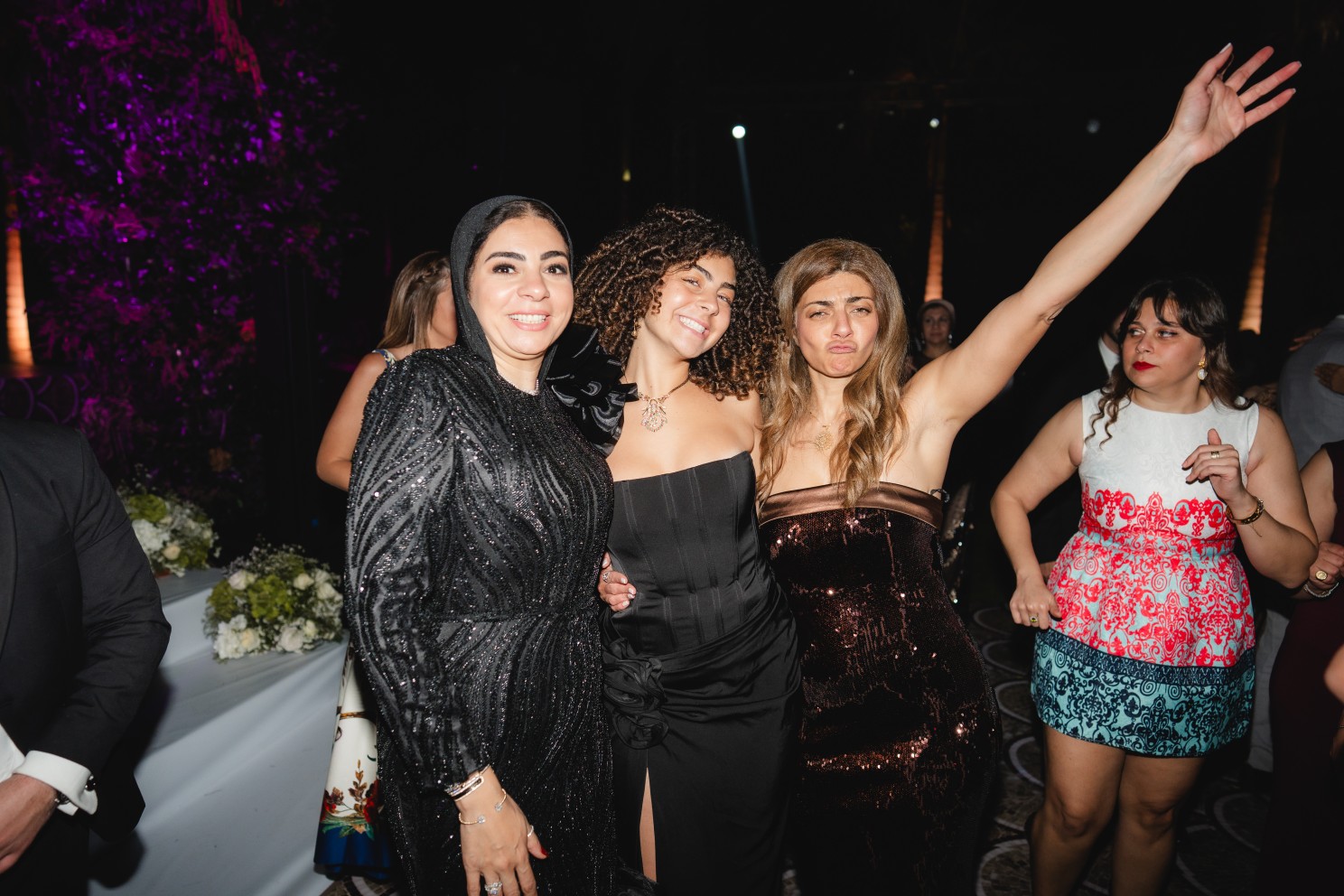
I’m an avid Zumba dancer. In April, my WHOOP logged a dance session. From a cardio standpoint, this was entirely accurate and closely resembled one of my Zumba workouts. But WHOOP had no idea that I was dancing at my cousin’s wedding in Egypt, or that I was so joyful, my heart so full, that I spent half the night in tears. It captured my movement and heart rate exactly right. But it understood nothing about the night.
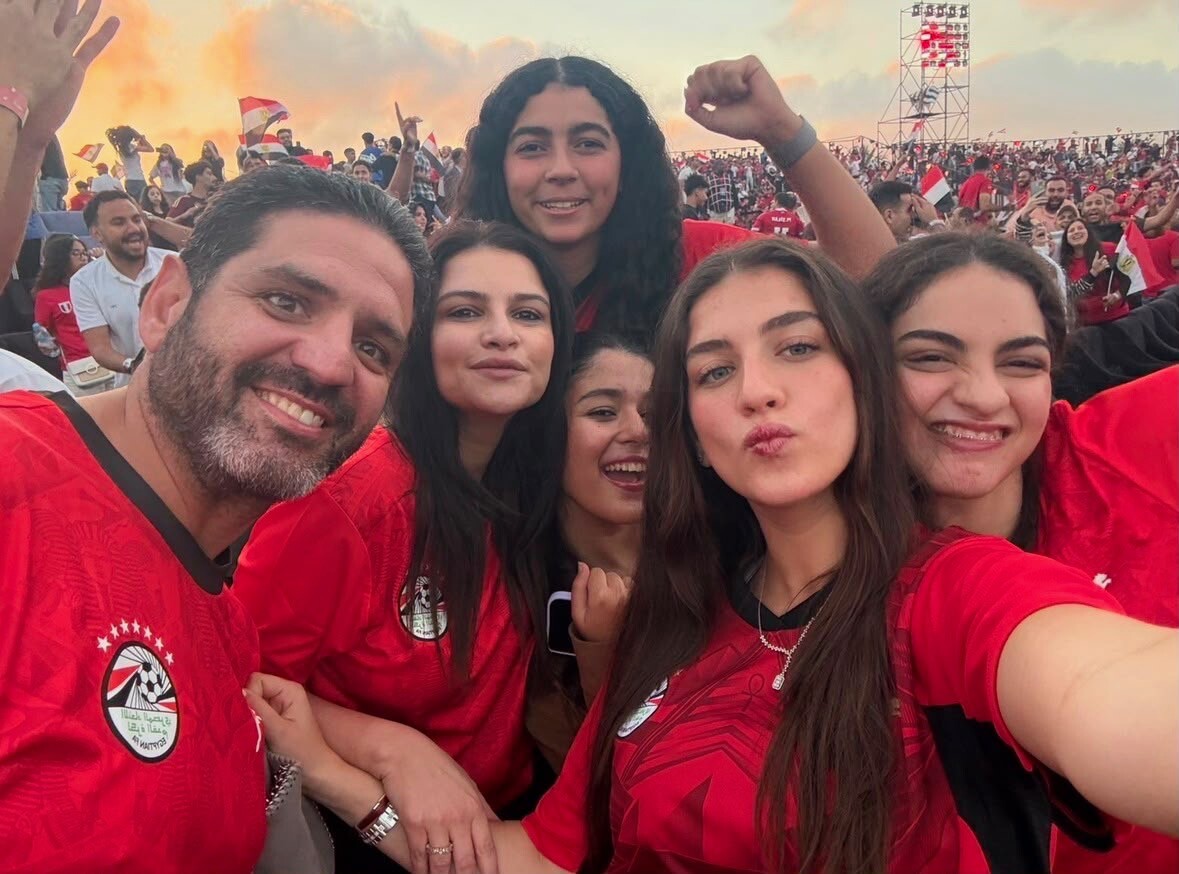
I’m writing this as we head into the final week of the World Cup. Depending on where you are in the world, following the tournament has required some very odd hours. My 19-year-old niece, Amina, a HUGE soccer fan, stayed up to watch Egypt play at 4 a.m. Did it destroy her WHOOP scores? Absolutely! But she watched alongside hundreds of friends and witnessed Egypt win its first World Cup match in 92 years. Now that is priceless!
When I reflect on what experiences matter most over the course of a year or lifetime, it’s the wedding, the friendships, the hours engaged in meaningful connection.
The numbers were never the point.
Emotion-maxxing
I have spent my career working on this exact problem that as much time as we spend with technology, it often doesn’t understand our emotional and mental state. I founded Affectiva on the premise that most of how we feel isn’t always reflected in our words at all. It’s in our faces, our voices, the heart racing, our goosebumps. We spent years teaching machines to read human emotions through analyzing facial expressions. And yet, today, I wear a band that can track my heart rate to the decimal but has almost no idea how I’m feeling or experiencing while it does.
The Data Gets a Vote, But It Doesn't Get the Final Say
I love my WHOOP. I also know its limits. It has helped me build healthier habits and understand my body in ways I couldn't before. But I never want to confuse measuring my life with living it.
But I never want to confuse measuring my life with living it.
Sure, the data gets a vote, but it doesn't get the final say. As humans, we get to decide whether staying up for a concert or a World Cup match is worth it. The day I let my recovery score make those decisions for me is the day technology stops working for me and starts running me.
That concert with Jana was an honest moment when I caught myself asking whether a night out was worth the hit to my recovery score. For all my WHOOP knows about my body, it doesn't know everything. The part it can't see, the part that decides what's worth doing and who's worth doing it with, is the most human thing I have.
That's the part I'll never outsource to a machine.